Showing posts with label pediatrics. Show all posts

Cleaners, Sanitizers & Disinfectants
Cleaners, Sanitizers & Disinfectants

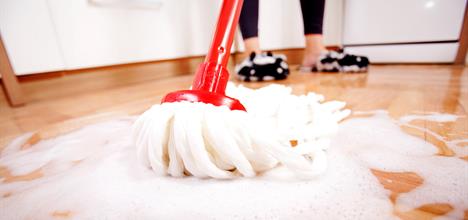
​​Housecleaning may not be the most enjoyable activity in your day, but a few minutes killing germs can go a long way toward keeping your family healthy.
  • Routine cleaning with detergent or soap and water removes dirt and grime from surfaces (ex: floors, walls, carpet, windows).
  • Sanitizing removes dirt and small amounts of germs. Some items and surfaces are cleaned to remove dirt then sanitized (ex: bathrooms, counters, toys, dishes, silverware).
  • Some items and surfaces require the added step of disinfecting after cleaning to kill germs on a surface (ex: changing tables, sinks, counters, toys).

Use Caution Around Cleaners, Disinfectants & Sanitizers

Although chemical disinfectants and sanitizers are essential to control communicable diseases, they are potentially hazardous to children, particularly if the products are in concentrated form.
  • Products must be stored in their original labeled containers and in places inaccessible to children.
  • Diluted disinfectants and sanitizers in spray bottles must be labeled and stored out of the reach of children.
  • Solutions should not be sprayed when children are nearby to avoid inhalation and exposing skin and eyes.
  • Before using any chemical, read the product label and manufacturer’s material safety data sheet.

Questions to Consider When Selecting a Disinfectant:

  • Is it inactivated by organic matter?
  • Is it affected by hard water?
  • Does it leave a residue?
  • Is it corrosive?
  • Is it a skin, eye, or respiratory irritant?
  • Is it toxic (by skin absorption, ingestion, or inhalation)?
  • What is its effective shelf life after dilution?

About Bleach:

Household bleach (chlorine as sodium hypochlorite) is active against most microorganisms, including bacterial spores and can be used as a disinfectant or sanitizer, depending on its concentration.

Bleach is available at various strengths:

  • Household or laundry bleach is a solution of 5.25%, or 52 500 parts per million (ppm), of sodium hypochlorite.
  • The “ultra” form is only slightly more concentrated and should be diluted and used in the same fashion as ordinary strength household bleach.
  • Higher-strength industrial bleach solutions are not appropriate to use in child care settings.
Household bleach is effective, economical, convenient, and available at grocery stores. It can be corrosive to some metal, rubber, and plastic materials. Bleach solutions gradually lose their strength, so fresh solutions must be prepared daily, and stock solutions must be replaced every few months. Bleach solution should be left on for at least 2 minutes before being wiped off. It can be allowed to dry, because it leaves no residue. Household bleach can be used to sanitize dishes and eating utensils. The concentration of chlorine used in the process is much less than that used for disinfecting other objects.

Cleaners Containing Disinfectants:

By separating out the cleaning and disinfecting processes, you will reduce the amount of disinfectant chemicals used.
  • Soiled objects or surfaces will block the effects of a disinfectant or sanitizer. Therefore, proper disinfection or sanitizing of a surface requires that the surface be cleaned (using soap or detergent and a water rinse) before disinfecting or sanitizing.
  • Bleach (the sanitizer/disinfectant) and ammonia (the cleaner) should never be mixed, because the mixture produces a poisonous gas.
  • Not all items and surfaces require sanitizing or disinfecting. See the Cleaning, Sanitizing, and Disinfecting Frequency Table from the National Association for the Education of Young Children (NAEYC) for more information. 

Alternative/Less Toxic Homemade Cleaning Products:

Alternative or less toxic cleaners are made from ingredients such as baking soda, liquid soap, and vinegar. Many of the ingredients are inexpensive, so you may save money over time. However they may require more “elbow grease,” which means you may have to scrub harder.
Although the ingredients in homemade cleaners (e.g., baking soda for scrubbing, vinegar for cutting grease) are safer, not all are nontoxic. Treat them as you would any other cleaner, with caution.

Additional Resources:

Last Updated
10/8/2019
Source
Adapted from Pediatric Environmental Health, 3rd Edition (Copyright © American Academy of Pediatrics 2011)

Adolescent Medicine


Care for common adolescent issues including: acne, sports physicals, sports related injuries, menstrual problems, and emotional problems. If your adolescent is now in college, we will continue to provide their medical care until they are 22 years old. Students may call us directly from college if they need medication refills or have questions about their health while they are away from home.


When kids are outside playing and having fun, they often don't think about hydration. It's up to the adults to make sure they are getting enough fluids -- and water or milk are the best options. 
We hope you're having a great summer!

 We hope that you have exciting plans for the upcoming summer! Did you know that Now is the Best Time to schedule your School, Camp and Sports physical? Click to read our most recent newsletter: http://ow.ly/mwZI50ujQ9F Or call to schedule today! 651-552-7999.


Kids ages 8 - 12 Learn To Fish Free on Saturday June 8th from 10 am - Noon. 

Equipment is Provided. 

Sponsored by Dakota County and MN Trout Unlimited. 

Register today and Have Fun Fishing!

 http://ow.ly/CIVd50nskmp

Body Image (Children and Teens)


 https://familydoctor.org/building-your-childs-body-image-and-self-esteem/


Children’s opinions of their bodies form at a very young age. Research suggests that children as young as 3 years old can have body image issues. There are many things that influence how children see themselves. Parents can play a critical role in helping children develop a positive body image and self-esteem (how you see yourself and feel about yourself).
It’s difficult to escape the “ideal” body image that is promoted in today’s media (on TV, in magazines, on the internet, and in social media). No matter how much you try to shield your children from it, the message is likely to come through. This can happen at school as they interact with friends or as they observe the adults in their lives.
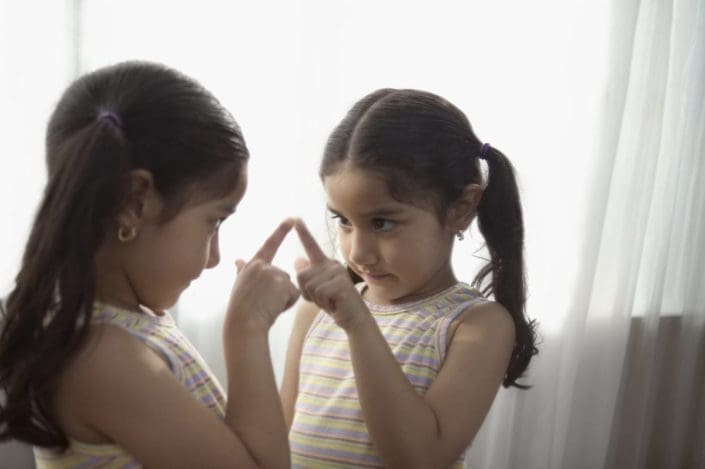
Even body language is not lost on children. Something as small as frowning in the mirror when you are trying on clothes can have an impact. This reinforces the message that a body needs to be perfect. That belief is the foundation for these building-block beliefs:
  • My body has to be perfect.
  • I’m not satisfied with my body.
  • A perfect body would make me happy.
  • A perfect body would earn me acceptance from others.
  • A perfect body would earn love and admiration, even attention.
  • Perfection is defined by a number on the scale or a size on a tag.
  • I will do anything to have a perfect body.
The problem is, a “perfect” body doesn’t really exist, at least not in the way it is defined in the media. Photos are often edited to make models thinner or to enhance their features. So, chasing the “perfect” body can end only in disappointment. This leads to poor self-esteem, which can impact all other aspects of life.
Poor body image is most often associated with girls, but boys suffer from it, too. They can feel as though they don’t have enough muscles or six-pack abs, or that they aren’t tall enough. One research study found that underweight boys are more likely to suffer from depression than are overweight girls.
Girls are, however, the most likely to suffer a negative outcome that involves eating disorders. Some of the most common eating disorders are anorexia (severely limiting food), bulimia (eating a large quantity of food, known as “binging,” and then throwing up the food, called “purging,” or by exercising or fasting to make up for overeating), and binge eating disorder (binging but not purging).

Do not wait until your child is older to begin guiding his or her opinions on body image. Studies show that children form opinions on what a body should look like at a much earlier age than we previously thought. In fact, it has been reported that children as young as 3 years old worry about being “fat.”
Now is the time to change the conversation. The way you talk about your body will influence your child. The meals you eat, the meals you serve, whether you exercise, and the importance you place on how you look will influence your child.
  • Don’t talk about dieting. Do talk about eating healthy.
  • Don’t talk about exercising to lose weight. Do talk about exercising to be stronger.
  • Don’t talk about wanting to improve your body to be more attractive. Do talk about improving to be ready for whatever life has to offer.
  • Don’t shy away from being photographed. Do take every opportunity to document your life with your child. You’ll be glad that you are “present” in his or her history.
  • Don’t grimace when you look at yourself in the mirror. Do smile in the mirror when you think about helping your child succeed.
  • Don’t use the “clean plate” measure of food. Do teach your child to pause and determine whether he or she is full or satisfied.
  • Don’t focus only on outer appearance. Do talk about what it means to be a good person. Praise your child on his or her “inner” attributes.
  • Don’t skip meals. Do show your children that it’s important to eat three healthy meals a day.
  • Don’t make every food decision for your child. Do give your child a say in what he or she eats. Let your child help choose foods at the grocery store. Use this time to educate your children on good food choices. Tell them that eating a variety of food is important for growing and to be strong. Teach them about vitamins and minerals.
  • Don’t eat only diet foods or fat-free foods. Do eat a variety of fruits, vegetables, and lean meats.
  • Don’t say, “I wish I looked like him.” Do find a role model, someone you admire based on their attitude, their kindness, or their good works. Tell your child. Let them hear you say, “I want to do more good like him.”
If you hear your child making comments about his or her body, don’t dismiss them. Talk about the comment and ask questions. For example, if your 8-year-old daughter says that her stomach is too big, don’t brush it off by saying, “Don’t be silly.” Ask her why she thinks it is too big. This will start a conversation and give you an opportunity to talk about what makes her special. You can steer the conversation back to having a healthy body and how our healthy bodies sometimes look different than what we see on TV and in magazines.
Also, your instinct may be to shield your child from TV. Instead, watch TV with your child and discuss what you see. Talk about how people are being portrayed. This gives you a chance to focus on character traits that are more important than outward appearances. You can remind your child of a time when he or she showed the same good character trait.


Things to Consider

Body image is a big part of your child’s self-esteem. If children don’t like the way they look or are dissatisfied with their bodies, their self-esteem will suffer.
How they see themselves can affect every aspect of their lives — either negatively or positively. It affects their choices, both long-term and short-term. It can impact their ability to meet people and make friends. It can prevent them from wanting to try new things or even seek out higher education. These social consequences often last a lifetime.
There are health consequences, too. People with low self-esteem are more likely to be depressed and have anxiety. Experiencing and being treated for depression can cause weight gain, which makes low self-esteem even worse. Another common inappropriate way to cope is to develop an eating disorder. Each of these can have a negative impact on your child’s health.

When to See a Doctor

To some extent, being preoccupied with body image is normal, especially during the tween and teen years. Do not worry too much about it, especially if you don’t see body image interfering with your child’s normal activity, friendships, or willingness to attend social gatherings. Continue to encourage your child and build his or her self-esteem during this time.
If you begin to see your child withdraw from his or her friends or from activities, it could be a warning sign of a more serious response to low self-esteem and body image.

Symptoms of depression

  • Social withdrawal (from friends/activities).
  • Lack of energy or low energy.
  • Not able to control emotions (crying/yelling).
  • Irritability (gets mad easily).
  • Changes in sleep (sleeping more than usual or less than usual).
  • Changes in diet (not eating or eating more than usual).
  • Not talking as much at home.
  • Wanting to spend time alone.

Symptoms of eating disorders

  • Excessive weight loss.
  • Eating very small portions or skipping meals entirely.
  • Exercising excessively.
  • Eating large amounts of food without gaining weight.
  • Finding excuses to go to the bathroom right after eating.
  • Using diuretic pills and laxatives.
  • Being secretive about eating.
  • Sneaking large quantities of food to eat alone.

Questions to Ask Your Doctor

  • How can I talk to my child about his or her weight?
  • How can I recognize an eating disorder?
  • What can I do to help my child feel more confident?
  • How can I help my child develop healthy eating habits?
  • How can I lose weight without it negatively impacting my child’s sense of body image?
  • How do I explain to my child my decision to have cosmetic surgery?


The Basics of Sun Safety for Kids


What's the difference between UVA and UVB?
Ultraviolet A (UVA) rays make the skin tan; ultraviolet B (UVB) rays cause skin to burn. But don't be fooled: A tan isn't healthier. "Both suntans and sunburns are signs that skin cells have been damaged by radiation from the sun," says Kavita Mariwalla, M.D., director of Mohs and Dermatologic Surgery at Continuum Health Partners in New York City. UVB used to get all of the blame for causing skin cancer, but new research shows UVA is equally damaging. This is particularly worrisome since UVA rays are 30 to 50 times more prevalent, and they penetrate deeper into skin cells.
What does SPF stand for? Is a higher number more effective?
An SPF, or sun protection factor, indicates a sunscreen's effectiveness at preventing sunburn. "If your child's skin reddens in 10 minutes without sunscreen, SPF 15 multiplies that time (10 minutes) by 15, meaning she'd be protected from sunburn for approximately 150 minutes or 2 1/2 hours," says Sancy Leachman, M.D., Ph.D., director of the Melanoma and Cutaneous Oncology Program at the University of Utah's Huntsman Cancer Institute in Salt Lake City. Of course, this depends on an adequate application of sunscreen and is based on SPF calculations with artificial instead of natural sunlight. The American Academy of Pediatrics (AAP) recommends using sunscreens with at least an SPF of 15, which blocks 93 percent of UVB rays. Higher SPFs provide even greater protection, but only to a certain point: SPF 30 blocks 97 percent of UVB and SPF 50+ (the maximum SPF you'll find on sunscreen labels due to new Food and Drug Administration (FDA) rules) blocks 98 percent.
What should I look for in a sunscreen? Are sunscreen sticks and sprays as effective as lotions?
As long as you're using a sunscreen with SPF 15 or higher that's broad-spectrum (meaning it blocks both UVA and UVB rays), it doesn't matter whether you use a lotion, cream, gel, stick, or spray. "The problem with some of the easiest and most cosmetically acceptable products is that they often do not adequately block both UVA and UVB. You must look at the ingredients, but the best sunscreen is the one your child agrees to wear," Dr. Leachman says. That said, sprays that contain the "right stuff" are great for on-the-go toddlers and preschoolers. Some young children are sensitive to certain sunscreen ingredients. To test for reactions, apply a small dab on the inside of your child's upper arm and check the area in 24 hours for signs of redness or rash. Sunscreens with titanium dioxide or zinc oxide are often less irritating because the ingredients aren't absorbed into skin. If your child is going to be in the water or getting sweaty, look for water-resistant sunscreens (the FDA has done away with waterproof and sweatproof claims). The new water-resistant labels state how long -- either 40 minutes or 80 minutes -- the sunscreen provides protection before you need to reapply it.
At what age is it safe to put sunscreen on a baby?
Your baby's skin is sensitive and can easily absorb too many chemicals, so avoid sunscreens before the baby is 6 months of age, except those with zinc oxide as the only active ingredient, and use on small areas of her body. Use clothing plus shade as the primary method of protection. Provide additional protection by keeping her out of the sun as much as possible: take walks before 10 a.m. or after 4 p.m., when UVB rays aren't as intense; use a stroller canopy; dress her in lightweight clothing that covers her arms and legs; and choose a wide-brimmed hat or bonnet that covers her face, ears, and neck.
How much sunscreen should I use on my child? How often should I reapply it?
The Skin Cancer Foundation (skincancer.org) recommends that adults use at least an ounce (that's a shot glass) of sunscreen, but there's no set amount for growing children. The important thing is to cover all exposed areas (especially easily overlooked places like ears, tops of feet, backs of knees, and hands) 30 minutes before your child heads outside so her skin has time to absorb it. Reapply at least every two hours, more frequently if she's swimming, playing in water, or sweating.
Do certain products work better on certain body parts?
Sunscreen lotions, gels, creams, and sprays all provide good protection from the neck down. "It's really a matter of which one is easiest to put on your child," Dr. Leachman says. There's less chance of sunscreen sticks getting into a child's eyes, so they're great for foreheads, noses, cheeks, chins, and even ears, but use only sunscreen sticks with components that include zinc oxide and titanium dioxide. A lip balm with an SPF is also recommended. Ultimately, though, Dr. Leachman says "the best sunscreen," is clothing (especially with SPF protection), followed by the lotions, gels, creams, and sticks.

We are what we eat!


They say you are what you eat, so it makes sense that eating healthy foods can help you stay...healthy! Trying to avoid colds and flu? From oysters to sweet potatoes, these foods can help: http://ow.ly/Sa8T306Lvqs

How long does it take to become a pediatrician?


Did you know? As a part of their 11 years of training, becoming a pediatrician classically includes four years of college and four years of medical school. Of course, you aren't a pediatrician after your six to eight years of college and medical school. To complete your training and become a pediatrician, you also have to complete one year of a Pediatrics internship and two years of a Pediatrics residency.

We would love to hear from you!

Please take a few minutes to leave us a review of your experience with us here. Thank you for helping us improve our business!

Winter Sports and Activities

00.PNG
  • Set reasonable time limits on outdoor play to prevent hypothermia and frostbite. Have children come inside periodically to warm up.
  • Using alcohol or drugs​ before any winter activity, like snowmobiling or skiing, is dangerous and should not be permitted in any situation.

Ice Skating

  • Allow children to skate only on approved surfaces. Check for signs posted by local police or recreation departments, or call your local police department to find out which areas have been approved.
  • Advise your child to:
    • Skate in the same direction as the crowd
    • Avoid darting across the ice
    • Never skate alone
    • Not chew gum or eat candy while skating.
    • Consider having your child wear a helmet, knee pads and elbow pads, especially while learning to skate.

What to Wear this Winter

  • Dress infants and children warmly for outdoor activities.  Several thin layers will keep them dry and warm. Don’t forget warm boots, gloves or mittens, and a hat.
  • The rule of thumb for older babies and young children is to dress them in one more layer of clothing than an adult would wear in the same conditions.
  • ​​When riding in the car, babies and children should wear thin, snug layers rather than thick, bulky coats or snowsuits.
  • Blankets, quilts, pillows, bumpers, sheepskins and other loose bedding should be kept out of an infant's sleeping enviroment because they are associated with suffocation deaths and may contribute to Sudden Infant Death Syndrome (SIDS). It is better to use sleep clothing like one-piece sleepers or wearable blankets is preferred.
  • If a blanket must be used to keep a sleeping infant warm, it should be thin and tucked under the crib mattress, reaching only as far as the baby’s chest, so the infant's face is less likely to become covered by bedding materials.

This Christmas...

...spend quality time with your kids before your extended family arrives. Christmas is a good time to teach your family, especially children about values like love, compassion, giving and sharing. Try to include the whole family in different Christmas activities like festival related cooking, decorating the house and the tree and wrapping up gifts...

How to Handle Head Injuries


I was less than two steps ahead of my 3-year-old daughter, Jillian, when her foot slipped off our front stairs. Within the seconds it took to grab her off the cement walkway, a nasty goose egg had started to form, and blood was gushing from a scrape above her eye. The result -- a shiny black eye, an unsightly gash, and an odd-shaped lump -- remained for weeks, but the doctor's prognosis was good: Jillian, like most kids who have that sort of accident, would be fine.

If it feels like your child is constantly taking a tumble, you're probably right. Falls are the leading cause of nonfatal injuries in kids of all ages, and they're the number-one cause of head injuries in those under age 9, according to the Centers for Disease Control and Prevention (CDC). Children under 4 are the most frequent victims of head injuries, and young athletes get mild-to-serious concussions on a regular basis. It's not known how likely it is that a child who hits her head will have a concussion, partly because there's no agreement among experts on the definition of the term in children. 

Common Childhood Habits

The causes of habits remain unknown. Their repetitive nature suggests that they serve a soothing or calming process for the brain. Interestingly, even in adulthood many people cling to some of these self-comforting traits during times of stress: sucking on pencil tips or their fingers, pulling their earlobes, fingering their hair. Learn more.

Dr. Wratkowski

Dr. Wratkowski is affectionately known as Dr. Paul. He divides his time working here at Mendakota Pediatrics – and as a hospitalist at the University of Minnesota Masonic Children’s Hospital on the Pediatric Bone Marrow Transplant unit. Dr. Paul’s background in Osteopathy has specially prepared him to treat musculoskeletal injuries and disorders – and he is particularly interested in Sports Medicine. Learn more about Dr. Paul!

A Healthy Self-Esteem

One of the most important things parents can do is ensure that their children develop healthy self-esteem. Children with healthy self-esteem have an easier time facing challenges and believe they are deserving of love, while those with lower self-esteem tend to be very self-critical and are less likely to face challenges because they are scared of failing.

Here are a few tips for helping your child develop good self-esteem.