Showing posts with label kids health. Show all posts

Asthma Fables and Facts

Although our knowledge of asthma is expanding year by year, many people still cling to outdated beliefs about the disease. Following are some that are often repeated:


Fable: Asthma comes and goes.
Fact: Asthma is often an inflammatory condition that is always in the airways, even when the person is not having trouble breathing. Exposure to an asthma trigger can worsen symptoms, but the underlying condition never goes away, although it can be controlled with medications and environmental control measures.
Fable: Asthma is an emotional disorder; it’s “all in the mind.”
Fact: Asthma is a lung disease; it affects the airways, not the brain. It’s true that symptoms may get worse when a person is under emotional stress, but this is probably more marked in adults and less so in children. Changes in the airways in asthma occur through physiological mechanisms, not emotional ones.
Fable: People with asthma should use medications only when they have attacks; otherwise, the medications lose their effect.
Fact: Regularly using medications is the only way to calm the underlying airway inflammation and prevent asthma flare-ups. Used at the correct dosage, daily medications do not lose their effect or cause uncomfortable side effects. Effective antiasthma medications include inhaled beta-agonists such as albuterol to stop attacks, and inhaled steroids, long-acting beta-agonists, and leukotriene modifiers to prevent attacks from occurring at all.
Fable: Asthma is just an annoying condition, not a real disease.
Fact: Asthma can kill when people do not get treatment to control the underlying condition and stop severe attacks. If everybody who needed medications used the proper ones to control symptoms and prevent flare-ups, hospitalizations and deaths from asthma would be greatly reduced.
Fable: Children grow out of asthma.
Fact: Most people who have asthma are born with a tendency to the condition and keep it for life. It is true many children get much better with age, and their asthma appears to go away completely. However, many have it return in adulthood. Other children who still have asthma are less likely to lose their asthma as they go in to their adult years.
Fable: Asthma clears up when you move to a warm, dry climate.
Fact: If the proper environmental measures are taken and medications are regularly used, people with asthma can live comfortably in any climate they prefer. Very rarely do people ever have to move out of a city or other area because of their asthma.
Last Updated
11/21/2015
Source
Guide to Your Childs Allergies and Asthma (Copyright © 2011 American Academy of Pediatrics)

Causes of ADHD: What We Know Today

Causes of ADHD: What We Know Today

Causes of ADHD: What We Know Today
​Attention deficit hyperactivity disorder (ADHD) is a neurobiologic condition whose symptoms are also dependent on the child's environment.
ADHD is now one of the most common and most studied conditions of childhood.

Research to date has shown ADHD may be caused by a number of things: 

  • Brain anatomy and function. A lower level of activity in the parts of the brain that control attention and activity level may be associated with ADHD. See ADHD and the Brain from Understood.org. 
  • Genes and heredity. ADHD frequently runs in families. A child with ADHD has a 1 in 4 chance of having a parent with ADHD. It’s also likely that another close family member, such as a sibling, will also have ADHD. Sometimes,  ADHD is diagnosed in a parent at the same time it is diagnosed in the child. See Inheriting Mental Disorders.
  • Significant head injuries may cause ADHD in some cases.
  • Prematurity increases the risk of developing ADHD.
  • Prenatal exposures, such as alcohol or nicotine from smoking, increase the risk of developing ADHD.
  • In very rare cases, toxins in the environment may lead to ADHD. For instance, lead in the body can affect child development and behavior.
​

There is no evidence that ADHD is caused by: 

  • Eating too much sugar
  • Food additives
  • Allergies
  • Immunizations

Why do so many children have ADHD?

The number of children getting treatment for ADHD has risen. It is not clear whether more children have ADHD or more children are receiving a diag­nosis of ADHD. Also, more children with ADHD are getting treatment for a longer period.
According to national data, ADHD affects about 9.4% of U.S. children ages 2-17―including 2.4% of children ages 2-5 and 4%-12% of school-aged children. Boys are more than twice as likely as girls to be diagnosed with ADHD. Both boys and girls with the disorder typically show symptoms of an additional mental disorder and may also have learning and language problems.

Because of more awareness and better ways of diagnosing and treating this disorder, more children are being helped. 

It may also be the case that school performance has become more important because of the higher ­technical demand of many jobs, and ADHD frequently interferes with school functioning.

Anaphylaxis in Infants & Children


Anaphylaxis in Infants & Children
Anaphylaxis is a rapid and severe allergic reaction. It is also a life-threatening emergency.
Research shows a rising number of children being treated in emergency departments for anaphylaxis in recent years. Allergic reactions are unpredictable in terms of when they occur, what types of symptoms develop, and the severity of those symptoms; they can happen to children at any age, including infants.  
Being prepared and knowing the signs of an allergic reaction can save a child's life. At any age, anaphylaxis can be deadly without immediate medical help. Read on.

Anaphylaxis includes a wide range of symptoms that can start quickly—within minutes or several hours after exposure to an allergy trigger. 

Be aware of any of the following symptoms, especially if they appear suddenly:
  • shortness of breath, wheezing, coughing or tightness in chest
  • trouble breathing or swallowing
  • skin changes like rash, redness or hives, and/or pale or bluish color
  • swelling of the lips or tongue 
  • sneezing, stuffy nose, runny nose
  • tight throat, difficulty swallowing, hoarseness
  • weak pulse, symptoms of shock
  • vomiting, diarrhea (if severe or combined with other symptoms)
  • dizziness or fainting
  • feeling of "doom," confusion, drowsiness or agitation
Infants may also experience other symptoms such as:
  • irritability, fussiness, or inconsolable crying   
  • sudden drooling  
  • unusual sleepiness  

Epinephrine is the recommended emergency treatment for symptoms of anaphylaxis.

Epinephrine helps quickly reverse the life-threatening symptoms of anaphylaxis. If it is available, epinephrine should be given immediately to anyone experiencing symptoms of anaphylaxis, followed by a call to 911, and a trip to the emergency department. 
The medicine comes in auto-injector syringes to make this easier. The best place to inject it is in the muscles of the outer part of the thigh.
Epinephrine autoinjectors should be prescribed for anyone who has ever had an anaphylactic attack and for infants and children at high risk for anaphylaxis.  Because a second dose may be needed if symptoms don't ease quickly, children at risk for anaphylaxis should carry at least two autoinjectors with them at all times.
Children who are old enough can be taught how to give themselves epinephrine, if needed. Epinephrine autoinjectors should be readily available in school or child care settings and trained staff should be available to act quickly in case of a reaction. Keep in mind, schools may require detailed instructions from your child's doctor about how and when to use it. See Administrating at School: Tips for Parents.

What to do after giving an infant or child epinephrine:

  • Note what time the epinephrine was given and call 911. Ask for an ambulance with epinephrine. Tell rescue squad when epinephrine was last given when they arrive.
  • Stay with child and give a second dose of epinephrine if: symptoms get worse, continue, or do not get better in 5 minutes.
  • Keep child lying on his or her back. If the child vomits or has trouble breathing, keep child lying on his or her side.
  • Give other prescription medicine (such as the child's inhaler/bronchodilator or an antihistamine prescribed by the doctor), but never use other medicine in place of epinephrine.

Lots of things can cause a severe allergic reaction.

Common Allergens that Can Trigger Anaphylaxis​

Foods
  • Peanuts are one of the most common U.S. food allergies. The American Academy of Pediatrics advises parents to introduce peanut-containing foods after their baby has tried low allergy risk foods as an allergen prevention strategy for high-risk infants"
  • Milk
  • Eggs
  • Tree nuts such as walnuts, pistachios, pecans and cashews
  • Shellfish (such as shrimp, lobster)
  • Fish such as tuna, salmon, cod (although, like with peanuts, there is some evidence that consuming fish early in life may help prevent allergic diseases such as asthma and eczema).
Insect stings
  • Bees
  • Wasps
  • Hornets
  • Yellow jackets
  • Fire ants
Medicines
  • Antibiotics and antiseizure medicines are some of the more common medicines that cause anaphylaxis. However, any medicine, even aspirin and other non­steroidal anti-inflammatory drugs, have the potential to cause severe reactions.
Other
  • In rare cases, anaphylaxis may be related to a certain food followed by exercise.


Be prepared: have an allergy and anaphylaxis emergency care plan.

Anyone caring for an infant or child with a life-threatening allergy must be able to recognize anaphylaxis and know when and how to give the lifesaving treatment (epinephrine). 
If your child is at high risk for allergies, or has had a previous severe allergy reaction, the American Academy of Pediatrics recommends you have an Allergy and Anaphylaxis Emergency Plan. Your pediatrician can help you and your family use this plan with anyone who cares for your child. It's also clearly written and easy to understand. See for yourself! 

Cleaners, Sanitizers & Disinfectants

Cleaners, Sanitizers & Disinfectants

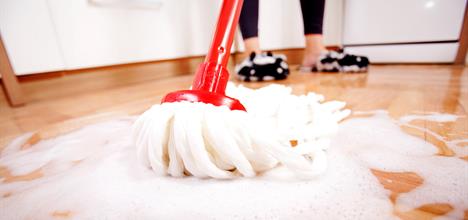
​​Housecleaning may not be the most enjoyable activity in your day, but a few minutes killing germs can go a long way toward keeping your family healthy.
  • Routine cleaning with detergent or soap and water removes dirt and grime from surfaces (ex: floors, walls, carpet, windows).
  • Sanitizing removes dirt and small amounts of germs. Some items and surfaces are cleaned to remove dirt then sanitized (ex: bathrooms, counters, toys, dishes, silverware).
  • Some items and surfaces require the added step of disinfecting after cleaning to kill germs on a surface (ex: changing tables, sinks, counters, toys).

Use Caution Around Cleaners, Disinfectants & Sanitizers

Although chemical disinfectants and sanitizers are essential to control communicable diseases, they are potentially hazardous to children, particularly if the products are in concentrated form.
  • Products must be stored in their original labeled containers and in places inaccessible to children.
  • Diluted disinfectants and sanitizers in spray bottles must be labeled and stored out of the reach of children.
  • Solutions should not be sprayed when children are nearby to avoid inhalation and exposing skin and eyes.
  • Before using any chemical, read the product label and manufacturer’s material safety data sheet.

Questions to Consider When Selecting a Disinfectant:

  • Is it inactivated by organic matter?
  • Is it affected by hard water?
  • Does it leave a residue?
  • Is it corrosive?
  • Is it a skin, eye, or respiratory irritant?
  • Is it toxic (by skin absorption, ingestion, or inhalation)?
  • What is its effective shelf life after dilution?

About Bleach:

Household bleach (chlorine as sodium hypochlorite) is active against most microorganisms, including bacterial spores and can be used as a disinfectant or sanitizer, depending on its concentration.

Bleach is available at various strengths:

  • Household or laundry bleach is a solution of 5.25%, or 52 500 parts per million (ppm), of sodium hypochlorite.
  • The “ultra” form is only slightly more concentrated and should be diluted and used in the same fashion as ordinary strength household bleach.
  • Higher-strength industrial bleach solutions are not appropriate to use in child care settings.
Household bleach is effective, economical, convenient, and available at grocery stores. It can be corrosive to some metal, rubber, and plastic materials. Bleach solutions gradually lose their strength, so fresh solutions must be prepared daily, and stock solutions must be replaced every few months. Bleach solution should be left on for at least 2 minutes before being wiped off. It can be allowed to dry, because it leaves no residue. Household bleach can be used to sanitize dishes and eating utensils. The concentration of chlorine used in the process is much less than that used for disinfecting other objects.

Cleaners Containing Disinfectants:

By separating out the cleaning and disinfecting processes, you will reduce the amount of disinfectant chemicals used.
  • Soiled objects or surfaces will block the effects of a disinfectant or sanitizer. Therefore, proper disinfection or sanitizing of a surface requires that the surface be cleaned (using soap or detergent and a water rinse) before disinfecting or sanitizing.
  • Bleach (the sanitizer/disinfectant) and ammonia (the cleaner) should never be mixed, because the mixture produces a poisonous gas.
  • Not all items and surfaces require sanitizing or disinfecting. See the Cleaning, Sanitizing, and Disinfecting Frequency Table from the National Association for the Education of Young Children (NAEYC) for more information. 

Alternative/Less Toxic Homemade Cleaning Products:

Alternative or less toxic cleaners are made from ingredients such as baking soda, liquid soap, and vinegar. Many of the ingredients are inexpensive, so you may save money over time. However they may require more “elbow grease,” which means you may have to scrub harder.
Although the ingredients in homemade cleaners (e.g., baking soda for scrubbing, vinegar for cutting grease) are safer, not all are nontoxic. Treat them as you would any other cleaner, with caution.

Additional Resources:

Last Updated
10/8/2019
Source
Adapted from Pediatric Environmental Health, 3rd Edition (Copyright © American Academy of Pediatrics 2011)


We still have the Flu shot vaccine and are vaccinating children over the age of 2. (We are out of Flumist and can no longer vaccinate adults due to the national shortage of the vaccine.) If you haven't already - please bring your children in for their Flu shot. Healthy Kids = Happy Kids!

25 phrases to inspire confidence in your child


7 positive phrases to boost your toddler's brain development


Brain growth is significant during the first three years of a child's life. Communicating positively helps with healthy development. Here are seven ways to provide positive reinforcement


Healthy children need to see the doctor, too!


 http://ow.ly/VAsP50vaubK

The Bright Futures/American Academy of Pediatrics developed comprehensive health guidelines for well-child care. This schedule of screenings and assessments is recommended at each well-child visit from infancy through adolescence.

Summer Is Almost Over!

Just a few more weeks of summer. Here are a few ideas to make the most of it!
have a lemonade stand 
make ice cream
meet friends at the pool
make sidewalk art with chalk
camp in the backyard
have fun!

 
Here's a list of kid-friendly restaurants across the Twin Cities - - including a few with healthy food options: http://ow.ly/eiWF50n8rQG


Poor body image is most often associated with girls, but boys suffer from it, too - and body image begins developing when children are very young.
http://ow.ly/rwZc50q0cpy

 
When your child is ill or injured it's not always easy to know if it's an emergency. This guide helps parents know what situations warrant care -- but not emergency care: 


When kids are outside playing and having fun, they often don't think about hydration. It's up to the adults to make sure they are getting enough fluids -- and water or milk are the best options. 
We hope you're having a great summer!

5 Signs of Asthma in Kids

LINK

 
Asthma is the most common chronic illness of childhood, but recognizing this breathing problem isn’t always intuitive.

1. She’s got at least one of the three basic symptoms.

Children with asthma tend to experience the following issues:

Frequent Coughing

This one’s especially worrisome if the coughing is loud and extreme or gets worse at night. A recent poll from the Asthma and Allergy Foundation of America found that 45 percent of children with asthma have coughed themselves awake. (That helps explain why asthma often leaves whole families exhausted.)
To determine whether your kid’s cough could be problematic, also track how long it lasts. Three weeks or more likely means it’s not just another cold. However, the nature of the hacking won’t tell you much; while asthmatic coughs tend to be dry, they can also produce lots of gunk.

Wheezing

With asthma, you usually hear wheezing at the end of a cough or when your child exhales, and it’s often loud enough to get your attention (think high-pitched, like wind in a tunnel or a squeaky toy). Alas, it can also be so quiet that only a stethoscope can detect it.